By: Retave’s TVET Desk Editor
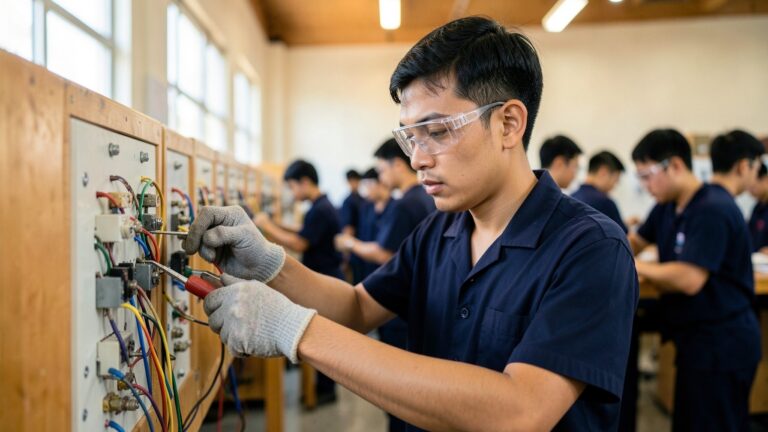
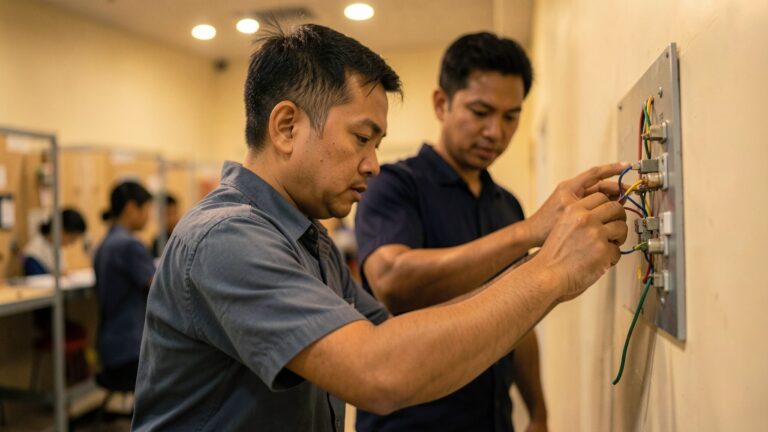
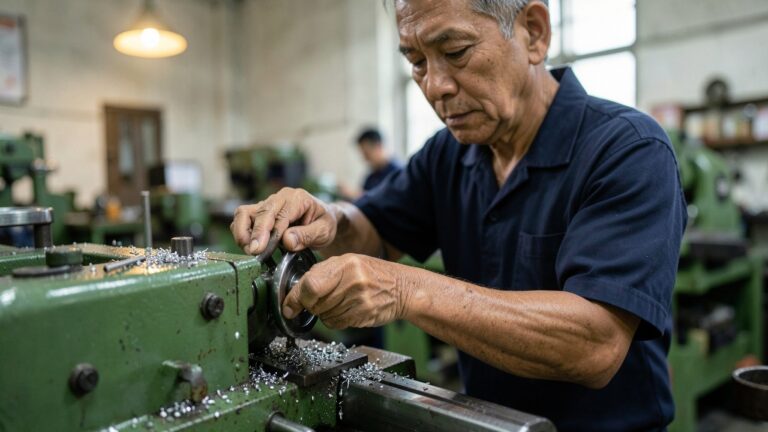
Malaysia aims to become a developed nation by prioritizing skills development on workshop floors, not just lecture halls, reflecting the core approach of The National TVET Policy 2030 or Dasar TVET Negara 2030.
Why Malaysia Is Betting on TVET
Here’s the problem the policy opens with: employers everywhere struggle to find workers whose skills actually match the job. The World Economic Forum flagged this “skills mismatch” back in 2014, and bodies such as the World Bank, the International Labour Organization (ILO), and UNESCO have since urged countries to fix their TVET systems, not just their university pipelines. Malaysia is reading from that same playbook. The government has tied its industrial ambitions, the New Industrial Master Plan 2030, the National Energy Transition Roadmap, and five high-growth, high-value sectors, from energy transition to rare earths, directly to the availability of enough skilled workers to staff them. TVET, in this framing, is what stands between Malaysia and a shrinking reliance on foreign labour.
A System Four Decades in the Making:
TVET in Malaysia isn’t exactly new. Its roots date back to a trade school in Kuala Lumpur in 1906, which fosters a sense of national pride and confidence in the system’s longstanding foundation. Still, formal public TVET only really began in 1964, with two institutions: Institut Latihan Perindustrian Kuala Lumpur and Institut Kemahiran Belia Negara Dusun Tua. From there, the system multiplied; polytechnics from 1969, the Malaysia Technical University Network (MTUN) from 1999, then community and vocational colleges through the 2000s and 2010s. By December 2023, the count stood at 1,345 TVET institutions nationwide: 669 public, 652 private, and 24 state-run. Large and genuinely fragmented, exactly what this policy is trying to bring under one coherent direction.
What the Policy Sets Out to Do
The vision is stated plainly: a Malaysia that’s a developed nation anchored on a skilled workforce. The mission narrows it further: TVET that’s responsive, flexible, and inclusive. Underneath those two lines sits a document explicitly designed to guide public and private TVET providers, along with around a dozen TVET-related ministries, toward the same targets: closing the skills gap, feeding high-growth industries, and ensuring TVET graduates actually earn a high income rather than settling for one.
Five Pillars, 23 Strategies, 67 Initiatives. The policy is organised around five strategic thrusts:
- Comprehensive and Synergistic Governance; fixing how TVET is coordinated across ministries
- Quality and World-Class Education Pathways; curriculum, teaching quality, and certification
- Efficient and Productive Industry Collaboration ;pulling employers into curriculum design
- Sustainable TVET Funding: rebuilding how the system pays for itself
- TVET as the Top Career Choice; repositioning TVET as a first choice, not a fallback
Each thrust breaks down into 23 strategies and 67 named initiatives; a level of granularity that suggests this isn’t meant to sit on a shelf.
From Cabinet Table to 2030
The National TVET Council, or Majlis TVET Negara (MTVET), approved the policy on 23 January 2024, with the Cabinet endorsing it via a memorandum on 29 March 2024, establishing a framework to guide efforts through to 2030, starting in 2024.
The next pieces in this series explore governance overlaps, funding issues, and the stigma around TVET, showing that challenges are recognized and being addressed to reassure stakeholders of ongoing commitment.
Further Reading
- The Current State of Malaysian TVET: Skills Over Degrees
- Inside National TVET Policy 2030 (Dasar TVET Negara 2030’s Fault Lines): Accreditation, Coordination, and the System It’s Trying to Fix
- Malaysia’s TVET Funding Model Has a Structural Flaw
References
Sekretariat Majlis TVET Negara. (2024). Dasar TVET Negara 2030. Jabatan Perdana Menteri Malaysia.
Ministry of Economy. (2023). National Energy Transition Roadmap: Energising the nation, powering our future. Government of Malaysia.
Ministry of Investment, Trade and Industry. (2023). New Industrial Master Plan 2030. Government of Malaysia.
World Bank, International Labour Organization, & UNESCO. (2023). Building better formal TVET systems: Principles and practice in low- and middle-income countries. World Bank.
World Economic Forum Global Agenda Council on Employment. (2014). Matching skills and labour market needs: Building social partnerships for better skills and better jobs. World Economic Forum.