By: Retave’s TVET Desk Editor
Aerospace, semiconductors, and pharmaceuticals come up again and again when people talk about where technical and vocational education and training (TVET) graduates should aim. Electric vehicles usually join the list, too.
Two official documents help test that list. The New Industrial Master Plan 2030 (NIMP 2030), the Ministry of Investment, Trade and Industry’s (MITI) blueprint for manufacturing, sets out where the government wants industry to grow. TalentCorp’s Malaysia Critical Occupations List (MyCOL) 2024/2025 shows where employers report shortages of skilled people right now. Read side by side, with this year’s vacancy data, they give each of the three industries a different answer.
What NIMP 2030 says about TVET
NIMP 2030 names 21 sectors in all, from food processing to rail. Aerospace, electrical and electronics (E&E, home to the chip industry), and pharmaceutical are three of them. Electric vehicles (EVs) aren’t a sector in their own right: the plan lists them as one of four “new growth areas”.
The plan’s headline targets cover manufacturing as a whole by 2030:
- value added of RM587.5 billion, up from RM364.1 billion in 2021
- employment of 3.3 million people, up from 2.7 million in 2022
- a median monthly salary of RM4,510, up from RM1,976 in 2021
It aims to get there by moving away from low-skilled, labour-intensive work toward knowledge-intensive jobs. The workforce for that shift, it says, will come from “upskilling and reskilling the workforce through market-responsive STEM and Technical and Vocational Education and Training (TVET) education streams.”
The plan supports this with five strategies to develop and attract talent. Two speak directly to TVET: “Expand TVET programmes for high-skilled jobs in critical sectors” and “use the mynext and MYFutureJobs platforms for strategic workforce planning”. A third, a progressive wage system, bears on what those jobs pay.
The MyCOL match
MyCOL names 66 critical occupations in all, most of them managerial and professional roles. By RETAVE’S count, 19 sit at technician, trade, or operator level, the kind of work TVET institutions train for.
Five of those 19 line up by job title with the industries in this piece:
- Electrical Engineering Technicians
- Electronics Engineering Technicians
- Aircraft Technicians
- Chemical and Physical Science Technicians, new in this edition
- Motor Vehicle Mechanics and Repairers, new in this edition
The clearest signal comes from chips
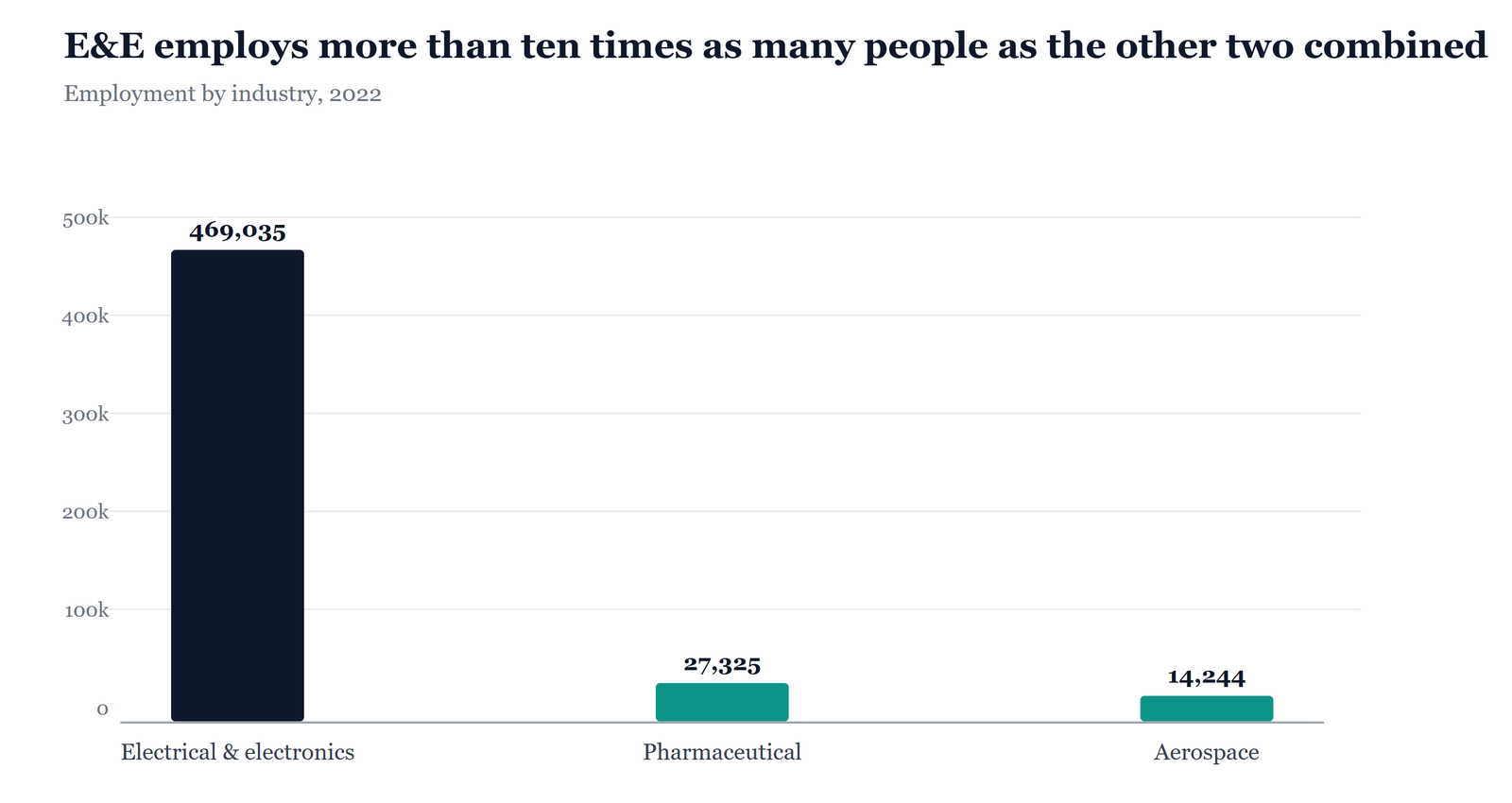
E&E is by far the largest employer of the three. MITI’s E&E sector plan puts employment at 469,035 people in 2022, up from 422,257 in 2019.
Current hiring points in the same direction. Between January and June 2026, the Human Resources Ministry’s MYFutureJobs portal, the same platform NIMP 2030 names for workforce planning, carried 343,836 TVET-linked vacancies. Human Resources Minister Datuk Seri R. Ramanan named electrical and electronics, and semiconductors, as among the main sectors behind them, along with automation, engineering, maintenance, and automotive, among others. Both E&E technician roles are on MyCOL.
The sector plan also shows where that work is heading. Its first action plan is to raise productivity through greater automation and smart manufacturing. It notes that semiconductor assembly, testing, and packaging are labour-intensive today, and that wider adoption of Industry 4.0 technologies would reduce the industry’s reliance on labour.
Government agencies are working on the training pipeline, too. The Malaysian Investment Development Authority (MIDA) has held talent-alignment workshops for E&E employers, partnering with the Ministry of Higher Education (MOHE) on one and the Penang Skills Development Centre (PSDC) on the other. Since March 2023, it has also led a talent facilitation task force with 17 members, including the polytechnic and education departments, connecting students with employers through job fairs, internships, and hiring support.
Aerospace, smaller and skills-heavy
Aerospace is a much smaller employer. MITI’s aerospace sector plan counted 14,244 workers in 2022, against 15,890 in 2019, a period that included the pandemic.
Its demand leans firmly toward skills. The plan records rising demand for skilled workers as the industry recovers and expects its expansion to require more highly skilled talent. By its count, Malaysia already supplies 54.0% of the region’s skilled aerospace talent, more than any other country in Southeast Asia. It also cites a global forecast that the aerospace industry will need 640,000 technicians over the next 20 years.
Training has its own place in the plan. Its tenth action plan aims to “strengthen education and training services to prepare a capable workforce for the aerospace industry.” On MyCOL, Aircraft Technicians are a critical occupation in their own right.
Pharma’s growing production base
Pharmaceutical employment reached 27,325 people in 2022, and grew faster than either of the other two industries between 2019 and 2022, according to MITI’s pharmaceutical sector plan.
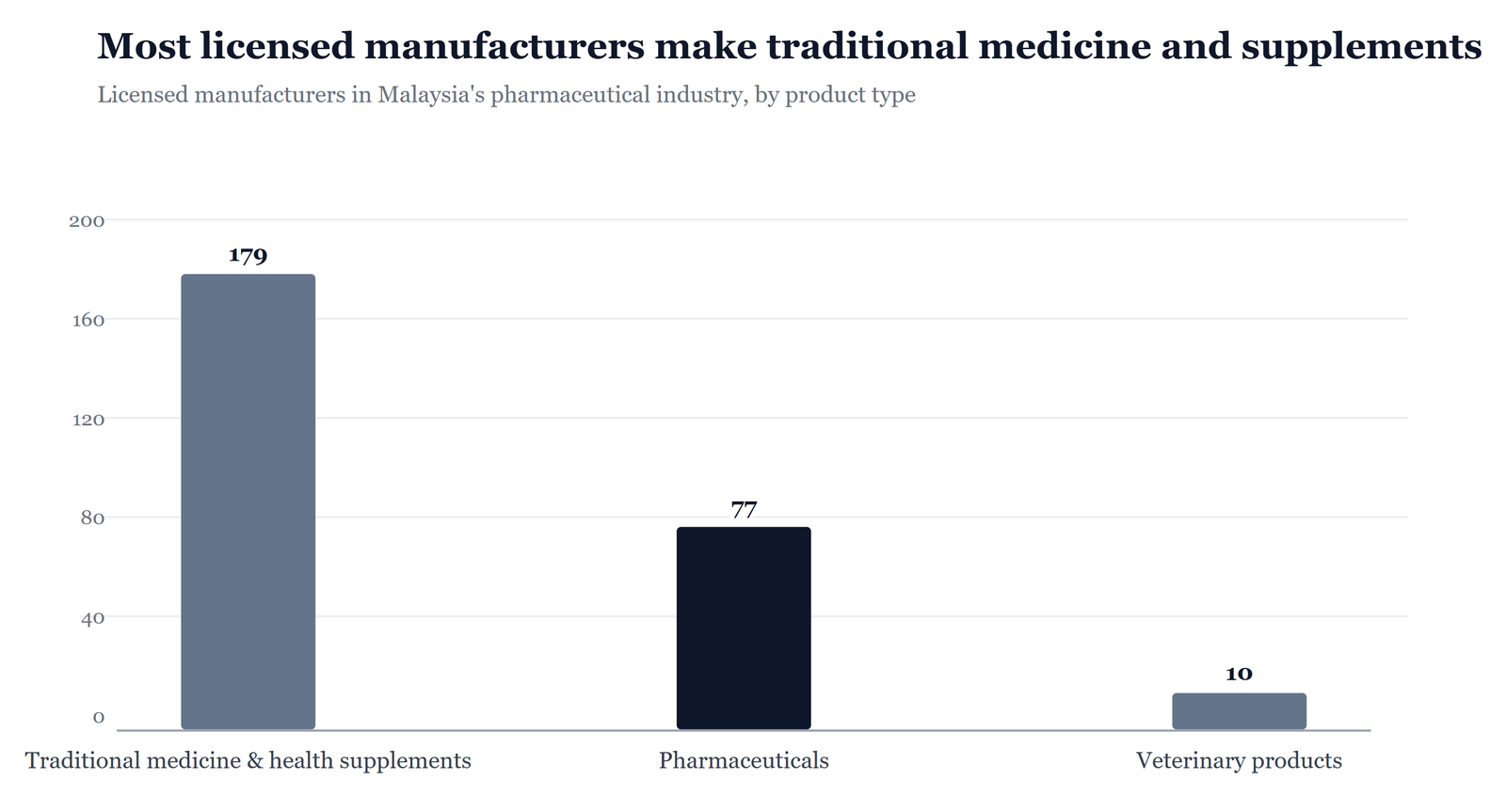
That plan also shows how much of the industry’s work is production. According to the National Pharmaceutical Regulatory Agency (NPRA), there are more than 266 licensed manufacturers: 77 making pharmaceuticals, 179 making traditional medicine and health supplements, and 10 making veterinary products.
It credits part of the industry’s growth to Malaysia meeting global manufacturing standards, such as Good Manufacturing Practice (GMP) certification and membership of the Pharmaceutical Inspection Co-operation Scheme (PIC/S). GMP is the rulebook that production and laboratory staff in those plants work to.
The government wants more of that production at home. The plan’s second action plan aims to “increase the capabilities of local manufacturers to develop biopharmaceuticals to support the National Vaccine Development Roadmap.”
It also links investment in the bio-based industry to faster growth of knowledge-intensive talent. It notes that ministries and government agencies already provide the industry with training, consultancy, and programmes to upgrade workers’ skills. Its most specific talent point is at the degree level: improving pharmaceutical education to address the limited supply of industrial pharmacists for biologics research and development.
Wider government plans point the same way. NIMP 2030 counts pharmaceuticals among the high-impact sectors behind its targets, and its TVET strategy is aimed at “high-skilled jobs in critical sectors”, though it doesn’t single pharma out by name.
The National Biotechnology Policy 2.0 (2022 to 2030), under the Ministry of Science, Technology and Innovation (MOSTI), makes healthcare and wellbeing one of its three thrusts, with a talent target set at the graduate level: recognising 80% of biotechnology graduates through a micro-accreditation programme.
For TVET students, a route already exists. Politeknik Nilai’s six-semester Diploma in Biotechnology (Diploma Bioteknologi) covers laboratory techniques and bioprocess technology. It lists pharmaceutical companies among the places its graduates can work, in roles such as laboratory technician, production technician, and quality assurance or quality control supervisor.
On MyCOL, the closest TVET-level match by title is Chemical and Physical Science Technicians, listed for the first time this edition. However, TalentCorp files it with technical and infrastructure roles and doesn’t link it to pharmaceuticals.
A national count of TVET hiring in pharmaceuticals is the next figure to watch for. The sector was not among those Datuk Seri Ramanan named behind this year’s TVET vacancies.
Three sectors, three answers
On the evidence in both documents and this year’s vacancy data:
- Chips, clearly. E&E and semiconductors are named in current TVET vacancy data, both E&E technician roles are on MyCOL, and a government agency is linking polytechnics with employers.
- Aerospace, yes, on a smaller scale. Aircraft Technicians are a listed critical occupation, and the sector plan commits to education and training.
- Pharma, a route in, with a hiring count still to come. A polytechnic pathway and the government’s production plans point toward laboratory and production roles.
Where EVs fit
EVs fall under the automotive sector, one of NIMP 2030’s 21 sectors. Under the plan’s Push for Net Zero mission, one of its mission-based projects is to “launch locally-manufactured EV”. Automotive is also on Datuk Seri Ramanan’s list of sectors posting TVET vacancies, and Motor Vehicle Mechanics and Repairers joined MyCOL for the first time this edition.
On training, the Malaysia Automotive, Robotics and IoT Institute (MARii) runs a reskilling and upskilling programme for battery-electric vehicles that’s open to holders of a Malaysian Skills Certificate (Sijil Kemahiran Malaysia, SKM) at Level 3, and reports that 2,234 people have been trained up to 2025.
If you’re weighing a polytechnic programme against these three industries, the strongest current signal comes from E&E, especially in automation and maintenance. Aerospace is a smaller, more specialised option for anyone drawn to aircraft. For pharma, the polytechnic biotechnology route is the clearest path in today’s market, and the next MyCOL edition and MYFutureJobs update are the places to watch for the first count of technician demand.
Further Reading
- Becoming technology creators: what NIMP 2030’s ‘Tech Up’ mission means for Malaysia’s campuses
- 21,391 and rising – Malaysia’s chip-talent drive passes one-third of its 60,000 goal
- The 66-occupation list, decoded: what the Malaysia Critical Occupations List (MyCOL) 2024/2025 names, group by group
Sources
- Bahagian Pengambilan Pelajar, Politeknik dan Kolej Komuniti. (n.d.). Diploma Bioteknologi. https://ambilan.mypolycc.edu.my/portalbpp2/index.asp?pg=program&kat=d&id=DG001
- Bernama. (2026, July 29). 343,836 peluang pekerjaan berkaitan TVET ditawarkan dalam enam bulan: Ramanan. https://www.bernama.com/bm/am/news.php?id=2587706
- Bioeconomy Corporation. (n.d.). National Biotechnology Policy 2.0 (DBN 2.0). https://www.bioeconomycorporation.my/corporate/nbp/
- Malaysia Automotive, Robotics and IoT Institute. (n.d.). Reskilling and Upskilling Programme for Next Generation Vehicle (NxGV), Battery Electric Vehicle (BEV). https://marii.my/programme-talent-nxgv-bev/
- Malaysian Investment Development Authority. (2025, July 31). Powering high-value industries with skilled talent. https://www.mida.gov.my/powering-high-value-industries-with-skilled-talent/
- Ministry of Investment, Trade and Industry. (n.d.). NIMP 2030 frequently asked questions. https://www.nimp2030.gov.my/index.php/pages/view/60?mid=456
- Ministry of Investment, Trade and Industry. (2023a). New Industrial Master Plan 2030. https://www.nimp2030.gov.my/nimp2030/resources/NIMP_2030.pdf
- Ministry of Investment, Trade and Industry. (2023b). New Industrial Master Plan 2030: Aerospace industry. https://www.nimp2030.gov.my/nimp2030/modules_resources/bookshelf/e-01-Sectoral_NIMP-Aerospace_Industry/e-01-Sectoral_NIMP-Aerospace_Industry.pdf
- Ministry of Investment, Trade and Industry. (2023c). New Industrial Master Plan 2030: Electrical and electronics industry. https://www.nimp2030.gov.my/nimp2030/modules_resources/bookshelf/e-03-Sectoral_NIMP-Electrical_Electronics_Industry/e-03-Sectoral_NIMP-Electrical_Electronics_Industry.pdf
- Ministry of Investment, Trade and Industry. (2023d). New Industrial Master Plan 2030: Pharmaceutical industry. https://www.nimp2030.gov.my/nimp2030/modules_resources/bookshelf/e-04-Sectoral_NIMP-Pharmaceutical_Industry/e-04-Sectoral_NIMP-Pharmaceutical_Industry.pdf
- TalentCorp Malaysia. (n.d.). MyMahir Malaysia Critical Occupations List (MyCOL) 2024/2025 [Brochure]. https://www.talentcorp.com.my/images/uploads/publication/205/MyMahir-MyCOL-20242025-Brochure-1773377416.pdf
- The Edge Malaysia. (2026, July 29). Rising demand creates 343,836 TVET job opportunities in six months, says Ramanan. https://theedgemalaysia.com/node/812528