

By: Retave’s Education Desk Editor
Malaysia’s next decade of university policy has a name: the Malaysia Higher Education Blueprint 2026–2035 (MHEB), released by the Ministry of Higher Education (MOHE) as the successor to the 2015–2025 blueprint. Where the last plan-built infrastructure, new places, new rankings, new access routes, this one tries to answer a harder question: what’s all of that supposed to produce?
MOHE’s own answer is “humanity-centric, purpose-driven nation builders.” That’s not just a line in a mission statement. It’s the organising idea behind the whole document, built on four core values: humanity-centric, holistic well-being, shared prosperity, and sustainability, meant to run through every layer of the system, from individual learners up to national policy.
That framing isn’t invented from scratch either. MOHE ties it explicitly to Malaysia’s National Education Philosophy, the long-standing statement that education should develop individuals who are “intellectually, spiritually, emotionally and physically balanced,” and to the MADANI principles the current government has used across policy areas: sustainability, prosperity, innovation, respect, trust, and compassion. The blueprint’s four core values are effectively those two reference points translated into a higher education strategy.
Three layers, one framework
The blueprint nests three groups inside each other. At the centre is Talent, not just students, but academic and administrative staff too, expected to become adaptive, agile, resilient nation-builders with values they’ve actually internalised, not just memorised. Around that sit Higher Learning Institutions (HLIs), judged on five fronts: teaching and learning, research and innovation, community relations, industry relations, and administrative services. And around both sit the wider Higher Education Ecosystem, measured against six characteristics: accessibility, quality, diversity/equity/inclusion, unity, adaptability, and sustainability.
Ten shifts, three waves
To get from where things stand now to where the blueprint wants them, MOHE has organised the plan into 10 strategic shifts covering learner development, TVET, financial sustainability, governance, research, global standing, lifelong learning, planetary health, and delivery systems.
Rollout runs across three phases through 2035:
- Ignite (2026–2028) — lay the legal and institutional groundwork: draft the One Higher Education Act, pilot TVET reforms, and to create new funding mechanisms.
- Propel (2029–2031) — scale what worked: expand micro-credentials, deepen industry partnerships, bring in AI-driven learning tools.
- Elevate (2032–2035) — consolidate Malaysia’s position as what the ministry calls a global higher education hub.
How it got built
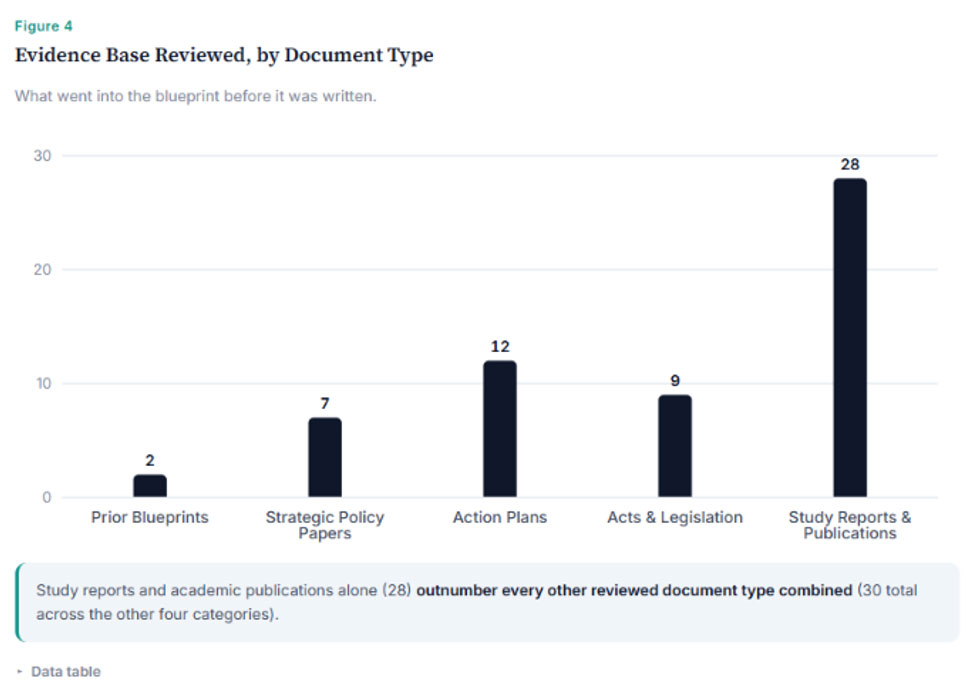
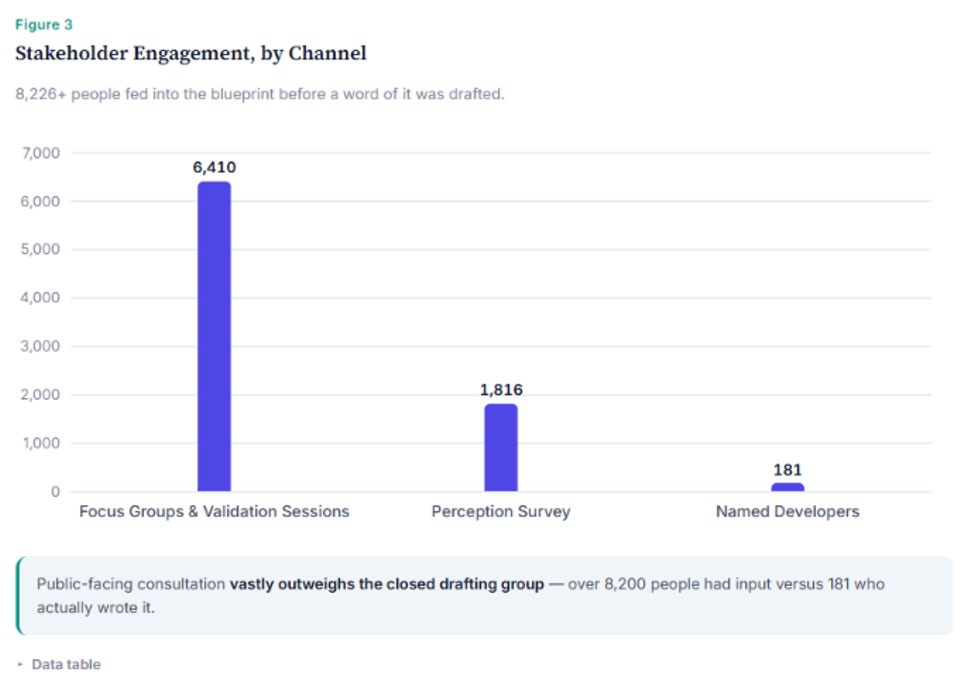
This wasn’t drafted by a small team behind closed doors. MOHE says 8,226 stakeholders fed into it: 6,410 through focus groups and validation sessions; 1,816 through a separate perception survey; and 181 named developers, split across an advisory committee, a steering committee, subject experts, writers, and liaison officers. The process ran in three phases: a review of the outgoing 2015–2025 blueprint from May to July 2024; a conceptualisation phase that produced the 10 shifts between August and October 2024; and a finalisation phase, running to mid-February 2025, that incorporated Cabinet guidance. Along the way, the team reviewed more than 100 documents, two prior blueprints, seven strategic policy papers, a dozen action plans, nine acts and pieces of legislation, and 28 study reports and academic publications combined.
Whether that process delivers the outcomes MOHE describes is, by definition, a question for the next decade to answer. What’s on paper now is the most detailed articulation yet of what the ministry wants Malaysian higher education to become, and a fairly specific account of how it plans to get there.
Further Reading
- What the Blueprint Asks of You, Depending on Who You Are
- The 11 Gaps Malaysia Says Its Higher Education System Still Has
- Two blueprints, two league tables: how Malaysia’s 2015–2025 and 2026–2035 higher education plans measure global standing
Source: Malaysia Higher Education Blueprint 2026–2035, Executive Summary. Ministry of Higher Education (MOHE), Malaysia.